

The Hidden Risks of Deep-Sea Aquaculture:
How Enpuda Uses In-Situ Testing to Secure Netting Safety
————————————————————————————————————————————————–
Among the various equipment deployed in deep-sea operations, the netting structure appears unremarkable at first glance, yet it is absolutely essential.
It neither thunders like an engine nor possesses the precision of a sensor, but it silently upholds the stability and safety of offshore fish cages.
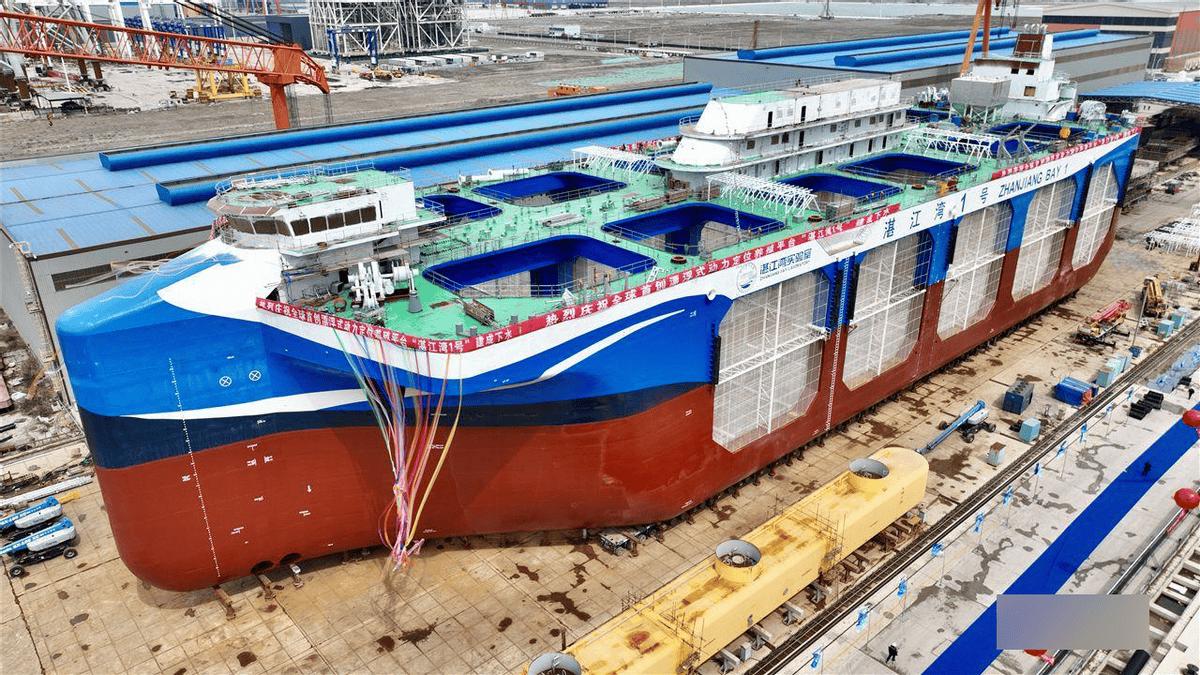
Unlike ordinary fishing nets, netting structures are immersed in complex marine environments for long periods, where they face repeated challenges from currents, friction, and high pressure. Over time, net ropes may wear down or even break, and the netting itself may suffer localized damage or large-scale rupture. In milder cases, this can lead to fish escapes and financial losses for enterprises; in severe cases, it can cause cage collapse and even casualties.
Therefore, comprehensive in-situ tensile testing of netting is essential for ensuring the safety of net structures in deep-sea aquaculture, pelagic fisheries, and related fields.
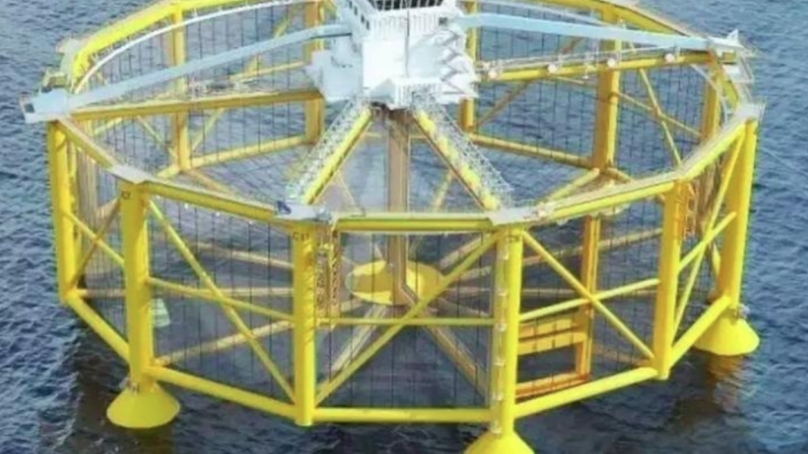
In response to the comprehensive mechanical performance testing needs of various netting and net structures,
the Enpuda EHF-9246-36 In-Situ Tensile Testing System precisely simulates complex multi-axial load conditions and delivers a complete and proven all-in-one testing solution.
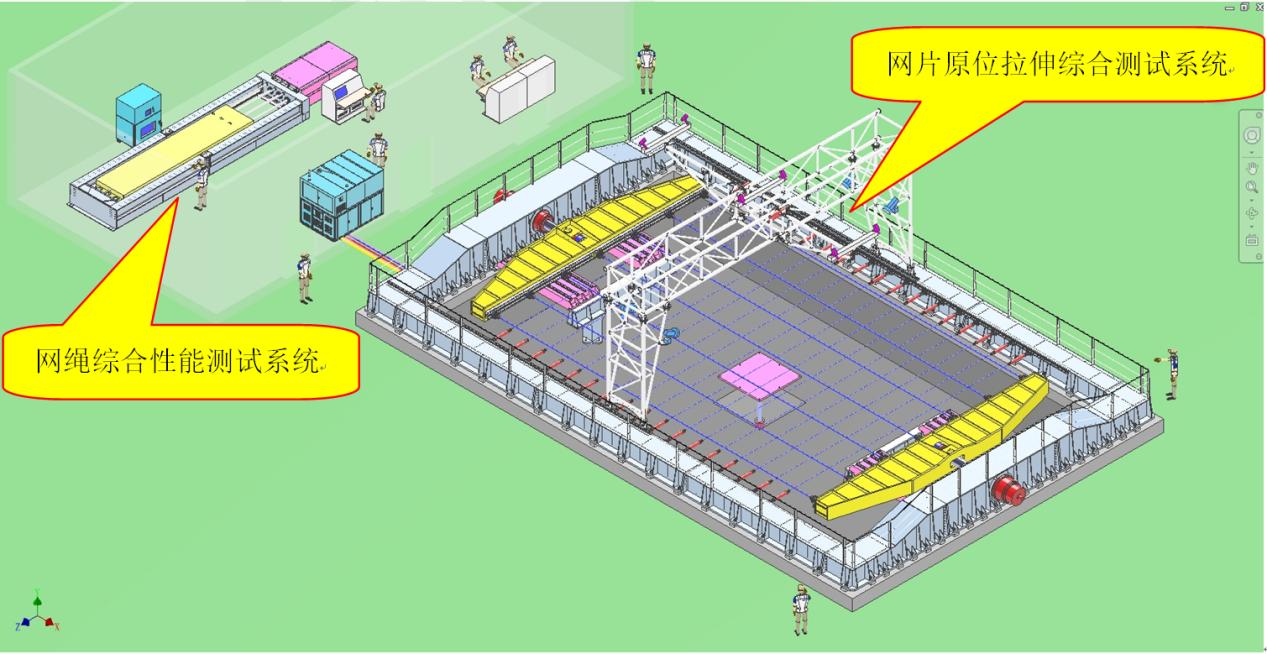
Enpuda EHF-9246-36 In-Situ Tensile Testing System for Netting
Applied to stress-strain tests, sustained creep tests, and rupture tests on netting, the system applies a vertical concentrated load at the center of the netting to simulate the effects of waves and currents. It can directly measure the maximum force in net ropes, elongation, and the overall force and deformation of the entire net, providing a basis for verifying the rationality of net structure design.
The system consists of a reinforced concrete foundation, a structural beam reaction frame, a servo actuator assembly, an XY-direction tensioning and measurement system, a hydraulic servo oil source, a fully digital measurement and control system, a computer control system, an optical 3D deformation measurement system, safety protection devices, and other accessories.
Most existing testing equipment can only conduct simulation tests on scaled-down models based on actual net dimensions, making it difficult to fully reproduce real working conditions. In contrast, the Enpuda EHF-9246-36 In-Situ Tensile Testing System for Netting, as the world’s first purpose-built customized equipment of its kind, can be tailored to the actual net dimensions used in real application scenarios and enables full-scale in-situ tensile testing. This system is more closely aligned with engineering practice, can more realistically reflect the in-service performance of netting in deep-sea operations, and provides authoritative and reliable test support for the safety assessment of deep-sea net structures in China.
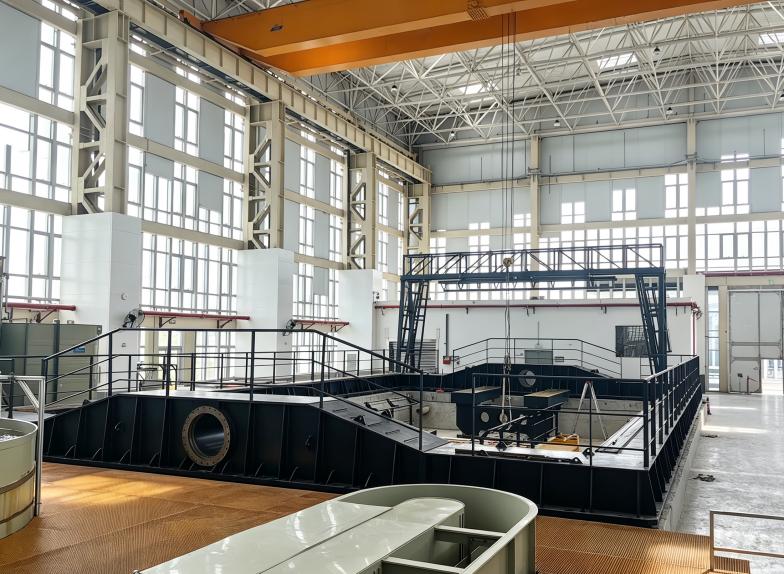
Product Advantages
1. Rigid mainframe for precision assurance:
The reinforced concrete foundation and the structural beam reaction frame together form the fixing device, giving the metal beam frame higher strength, greater rigidity, excellent stability, faster cycling speed, minimal deformation, and effectively improved control and measurement accuracy.
2. High-end core configuration:
The core components adopt internationally renowned brands such as MOOG servo valves from the United States, Delta controllers, Transcell dynamic sensors, and MTS displacement sensors, providing assurance for the system’s long-term stable operation.
3. Intelligent control with smooth multi-mode switching:
The system features force and displacement PID closed-loop control, enables smooth, bumpless switching between any control modes, and allows adjustment of the phase difference between channels, achieving fast control speed, high precision, and testing free from shock and interference.
4. Comprehensive software functions:
The software operates on the Windows testing platform and works with the control testing system to perform various dynamic and static mechanical performance tests. As a self-contained system, it features high-speed data communication with the control system. While controlling the testing system, it simultaneously plots various test curves in accordance with test requirements, and independently performs functions such as test management, data storage, and test report printing.
5. Multiple protection for worry-free safety:
The system is equipped with mechanical protection for load and stroke limits, as well as alarm and shutdown functions for oil circuit blockage, overtemperature, low oil level, hydraulic system overload, motor overheating, specimen failure, and other abnormal conditions.
Post time: Aug-17-2026

